


Moxibustion
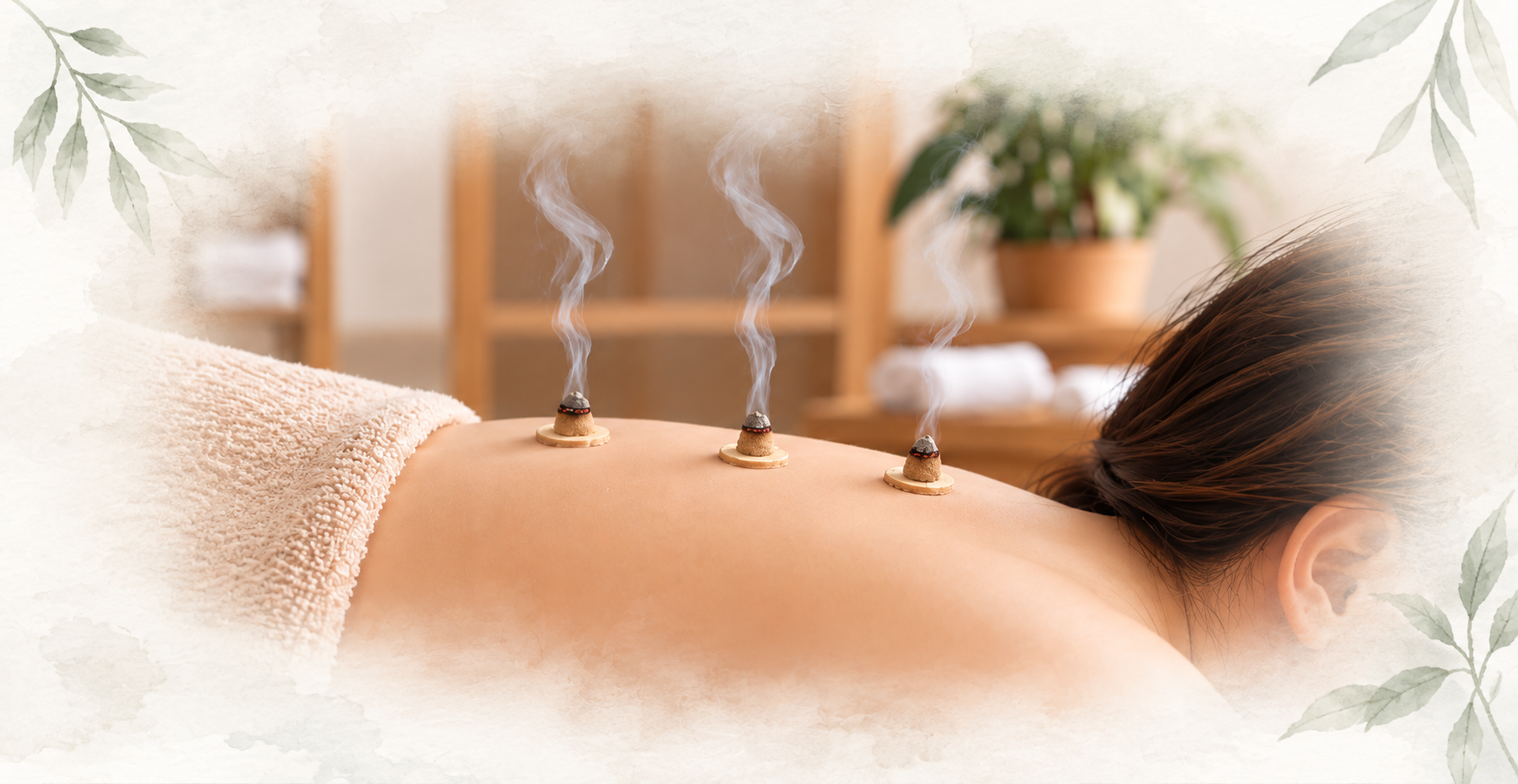
Moxibustion is a Traditional Chinese Medicine treatment that uses the controlled warmth of dried mugwort, known as moxa, over specific acupuncture points. This gentle therapy helps stimulate circulation, relax tense muscles, and support the body’s natural healing process.
Moxibustion may be performed independently or combined with acupuncture to create a personalized treatment based on your symptoms and wellness goals
Benefits of Moxibustion
Pain & Muscle Tension
Therapeutic warmth may relax tight muscles, reduce stiffness, and provide natural support for chronic pain and physical discomfort.
Digestive Wellness
By warming selected acupuncture points, moxibustion may support healthy digestion and help relieve occasional bloating or abdominal discomfort.

Women’s Health
Moxibustion may support menstrual comfort, reproductive wellness, and overall hormonal balance as part of a personalized treatment plan.

Immune Support
Moxibustion may help strengthen overall wellness and support the body’s natural defenses through the principles of Traditional Chinese Medicine.
Circulation & Warmth
Moxibustion encourages circulation and may benefit individuals who frequently experience cold hands, cold feet, or sensitivity to cold.

Stress & Fatigue
The soothing warmth of moxibustion promotes relaxation and may help reduce stress, tension, and feelings of low energy.

Moxibustion FAQs
-
Moxibustion is a Traditional Chinese Medicine therapy that uses controlled heat from dried mugwort to warm specific acupuncture points and support circulation, relaxation, and balance.
-
The warmth stimulates targeted areas of the body and may encourage circulation, relax muscles, and support the body’s natural healing response.
-
Moxibustion is generally considered safe when performed by a trained practitioner. Treatment is carefully monitored to prevent excessive heat and protect the skin.
-
Moxibustion should not hurt. Most patients describe the treatment as pleasantly warm, calming, and relaxing.
-
The number of sessions depends on your symptoms, health goals, and response to treatment. Your practitioner will recommend a personalized treatment plan after your consultation.